What this article covers
- How AI and machine learning (ML) relate, and common terms
- What kind of service Amazon SageMaker is
This is the second article in our AWS generative AI series, following our well received article on Bedrock. This time, we give an easy explanation of SageMaker.
To talk about SageMaker, we first need to talk about machine learning.
AI and machine learning (ML)
When we talk about ML, people often ask how it differs from AI. The short answer is that ML is part of AI.
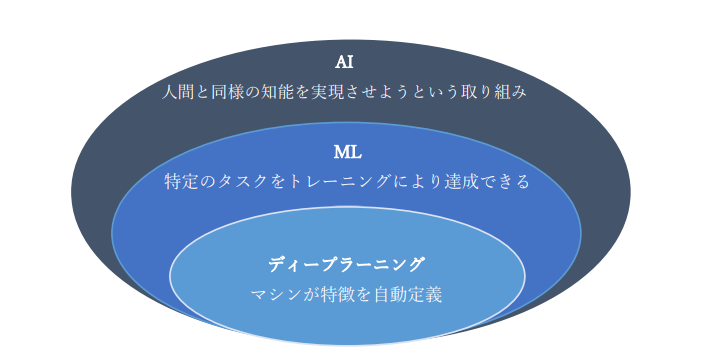
In other words, AI includes ML. Below, we talk about ML, but since many technical terms come up, here are the terms and their meanings first.
Technical terms
Architecture
Architecture decides the basic structure of an ML model. Imagine building a house with LEGO bricks. Deciding the shape of the house, the layout of the rooms, and where the windows and doors go is the architecture. It is the basic plan and design of what kind of house to build.
Hyperparameters
Hyperparameters decide the learning process of an ML model. In the LEGO example, they are the detailed rules for building the house, such as how many bricks to use at a time and when to add new bricks.
Layers
Layers are part of the architecture and show how deeply information is abstracted. The more layers there are, the more complex the patterns the model can learn.
Number of epochs
This is one of the hyperparameters and shows how many times training is repeated.
Keeping these in mind will help you understand the rest of the article.
What is ML?
ML means giving a computer a large amount of information so that it can produce the right answers.
For example, by showing it many photos of dogs labeled as dogs and many photos of cats labeled as cats, it learns to tell dogs and cats apart. In ML, this is called training.
However, this work takes a lot of effort, because there are many things to decide, such as the architecture and hyperparameters, and finding the best values by hand is extremely difficult.
For example, for the architecture you decide things like the number of layers, and for the hyperparameters you decide things like the number of epochs.
You also have to choose the best algorithm for training, for example whether to train the model to predict numbers, such as a house price from its size, or to sort things into different classes, such as spam and normal email.
In this way, ML only works after going through complex steps.
What is SageMaker?
Now that you understand what ML is and how hard it can be, let us talk about SageMaker.
SageMaker is a service that makes complex ML simple. Here is why.
Much less setup time
When you set the architecture and hyperparameters described above, suitable values are set automatically.
Get started quickly
Running ML takes just one click. It can also run these algorithms with up to 10 times the performance of other ML services.
Smooth work
SageMaker offers fully managed scaling, which automatically adjusts the computing resources needed when users train ML models or run inference. This keeps work smooth even when training models at petabyte scale.
As you can see, SageMaker is a very useful service for ML.
In fact, Amazon has announced that the TCO of fully managed SageMaker is 54 percent lower than that of self managed Amazon Elastic Kubernetes Service (Amazon EKS), which leads to higher productivity. TCO (total cost of ownership) here means the cost of building, training, and releasing an ML model.
If you are interested, please contact us. We are also happy to answer any questions you may have.